Automated Parts Cleaning System
Automated Parts Cleaning System
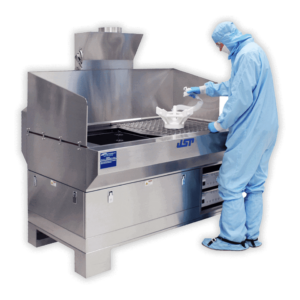
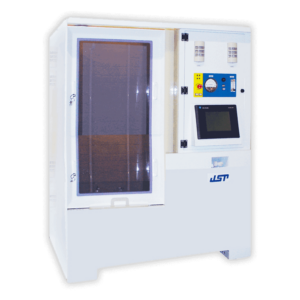
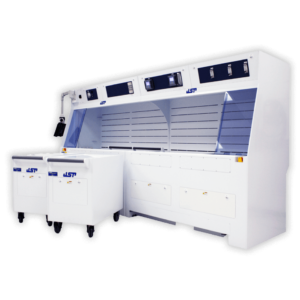
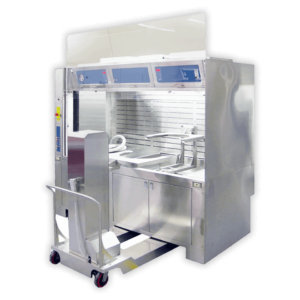
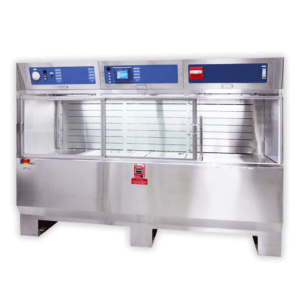
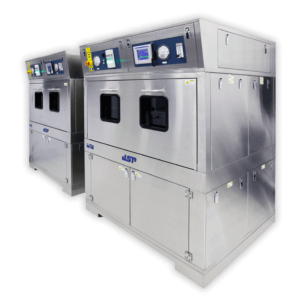
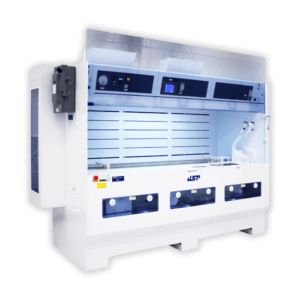
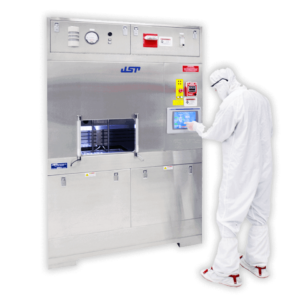
JST’s Automated Parts Cleaning System services a multitude of parts, performs a variety of chemical processes, and restores specialty parts to a chemically pure state.

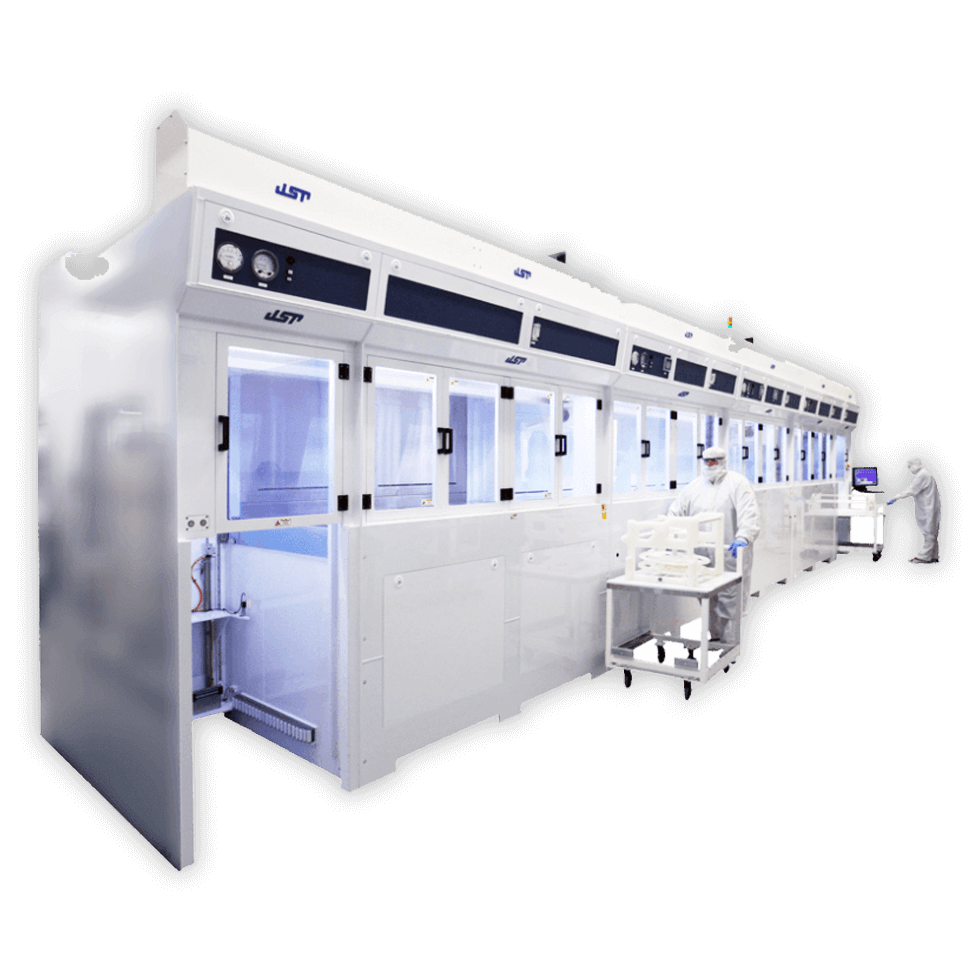
- Material Options: 304L stainless steel, 316L stainless steel, FM-approved PVC-C, or white polypropylene
- Internal stainless steel frames isolated from process chemistry for larger cleaners
- Available dual rail Front Linear Transfer, Rear Mounted Linear Transfer, or Overhead Linear Transfer provides stable high speed product movement
- Operation platforms include Automated Wet Benches, multi-tasking, or semi-automated operation platforms
- Designed with a programmable logic controller (PLC) in addition to a color touchscreen that control the entire wet bench
- Ergonomically designed front or side load/unload access for product cassettes
- Recessed bath design pulls chemical fumes through the exhausted dual containment plenum
- Compatible with any JST chemical or rinse process modules
- Customizable product carriers/cassettes and racks.
- GEM/SECSII factory automation interface
- Ergonomically mounted 23″ color touchscreen monitor with JST’s GENII software
- Local data logging of all process parameters and lot tracking stored on the PC’s hard drive
- Auto load/unload door
- CO2 fire suppression system
- Integrated HEPA filters provides an ultraclean process environment
- Nitrogen and DI water hand spray cuns
- On-board chemical analyzer with integrated concentration control and monitoring for reduced chemical usage
- Dry to Dry configuration using JST’s IPA Dryers
- SEMI S2 certification
- CE marking
- 3rd party electrical inspection
Automated Parts Cleaning System Overview
JST’s Automated Parts Cleaning System wet bench is well-suited for a broad range of typical applications, including post-etch and post-CMP component cleaning, refurbishment of tooling and fixtures, and precision cleaning where particulate and chemical residues must be tightly controlled. It is particularly effective for components used in wafer processing, advanced packaging, MEMS fabrication, and power device manufacturing, where contamination can directly impact yield and reliability.
The system may be customized to address a multitude of parts and a variety of chemical processes. Among JST’s diverse line of industrial automated cleaning solutions, this modular wet bench can safely clean a range of materials, including larger, heavier, and more unique materials, as well as smaller, delicate parts.
From a process advantage standpoint, the platform enables consistent, repeatable cleaning across varying part sizes and materials, helping fabs standardize maintenance and cleaning workflows. Its configurable automation options reduce operator variability while supporting high-mix production environments. The ability to integrate multiple chemistries and rinse sequences within a single platform also streamlines process flow, minimizing manual handling and associated contamination risks.
Key industries benefiting from this solution include semiconductor front-end and back-end manufacturing, aerospace electronics, medical device production, and precision industrial manufacturing. In these environments, maintaining ultra-clean components is critical to ensuring long-term equipment performance and product quality.
The JST parts cleaners utilize either manual or automated platforms that provide accurate control, high throughput, and production flexibility. The Front Linear Transfer, Rear Mounted Linear Transfer, or Overhead Linear Transfer options provide repeatable, high-speed product movement. The Specialty Automated Parts Cleaning System is compatible with all chemical and rinse process models designed by JST. Customers may outfit this wet bench with customizable product carriers, cassettes, and racks to suit their needs.
As with all JST wet benches, these systems are designed for ease of maintenance activities and come with our standard 24/7 Technical Support.